Table Of Content
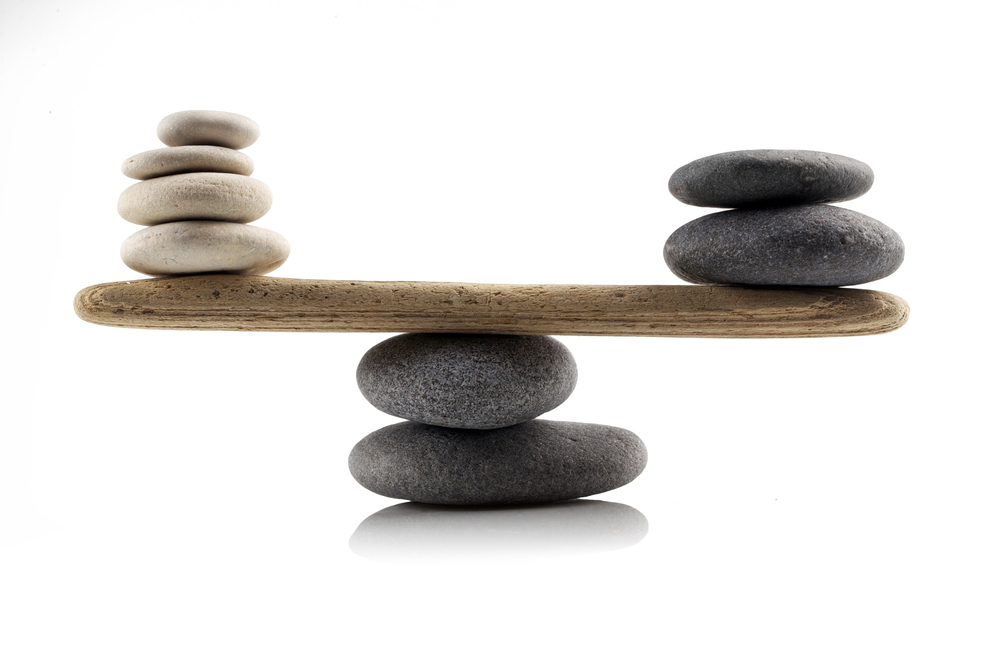
The element's position on the page dictates how balanced the page looks. The most challenging aspect to attaining visual balance in graphic design is the fold. You may initially create a perfectly balanced layout, but it appears off-balance as the reader scrolls down the page. Your composition should balance diagonally, horizontally, vertically, or foreground versus background to achieve visual balance.
Emphasis
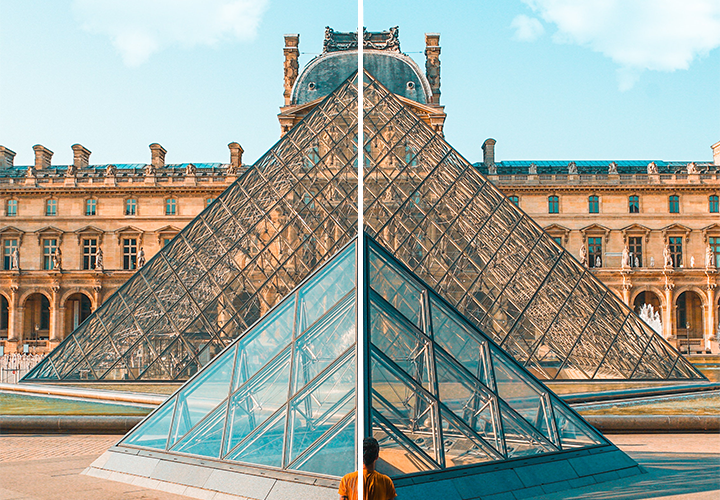
To get this effect, one side can feel heavier than the other as long as it is still balanced. The column in the image is slightly off center, and it anchors the composition with a strong vertical line — it’s an object we know weighs a lot. The railing on the left provides a strong connection with the left edge of the screen. It’s hard to imagine any design element on the page throwing either out of balance. Mosaic balance (or crystallographic balance) results from balanced chaos. The composition lacks distinct focal points, and the elements share a uniform emphasis.
Balance 101: how to use symmetry and asymmetry in design
As a design principle, balance refers to the distribution of elements in a specific artwork or design. Our eyes naturally seek out order and a sense of stability in any image that we see. This is also the psychological reason behind why people are more attracted to faces and objects that are symmetrical.
Table of Contents
Examples of symmetrical designs are corporate logos such as those of Chanel and Starbucks. Use an unbalanced composition when you intentionally want to make your viewer feel precarious. White space doesn't necessarily mean that the empty space is white in color - it can be any color.
You can stay true to this principle of design by using similar colors, shapes, textures, and elements that appear consistently throughout your communication. Or is everything concentrated on one corner of the design, leaving the other end vacant with ample negative space? Balance the elements within your designs to give them a pleasing appearance.

Trending Guides
And this isn’t limited to designs with large dimensions vs. small ones. The same concept can occur when the artwork is bisected along any axis.
Navigating the evolving horizon: Designing for the future in the interior design industry - ET Edge Insights - ET Edge Insights
Navigating the evolving horizon: Designing for the future in the interior design industry - ET Edge Insights.
Posted: Wed, 28 Feb 2024 08:00:00 GMT [source]
Rhythm
And for something intrinsically visual like art, balance in design is critical. A designer can create balance by combining many complex shapes in a composition with a field that is flat or plain. When these two opposites come together, the complex details will fall into balance with the plainness on the other side of the design. The creativity here is more unanticipated and so, it also generates more interest than in the case of the simple symmetrical balance. To understand balance better you’ll need to understand the difference between visual weight and visual direction. Radial balance is established when elements appear to radiate from a central focal point.
Mastery of balance enhances the overall impact and readability of designs. Pattern is a fundamental principle of design that involves the repetition of specific visual elements to create a predictable and organized arrangement. This principle applies to textures, shapes, lines, and colors that are repeated to form a cohesive design feature. Patterns can enhance visual interest and reinforce branding by creating a distinctive and memorable aesthetic. They help in structuring the design space, making the content more approachable and enjoyable to view.
You can think of it like the seesaw you might have played on when you were young, or as a beam balance scale. You can have different weights on each side, but can remain balanced by how the heavier and lighter elements are positioned and stacked. Finding the center of the design and mirroring the weight on each side with various techniques will keep your design from being boring. A similar concept applies for your designs because it’s human nature for people to like some type of balance for the stability and structure it provides. If you place a dark color next to a light color, the dark element would naturally feel heavier in the design. Balance in design covers how elements are weighted against each other on different sides of a design to create cohesiveness, completion, and satisfaction.
In this newsletter example from Netflix, balance was created using a plain, flat field with a complex composition of images and texts. The details on the right appear in harmony with the almost empty area on the opposite side. Home furniture and accessories company Home Sociētē has a website that’s the epitome of asymmetric balance. On the left side are images, while on the right side are texts of varying sizes and font styles.
The horizontal scroll is an example of balance throughout, giving the viewers a design that’s pleasing to the eyes and exciting to the senses. The world’s largest coffee franchise has one of the most iconic logos you can find. It’s because of its vertical plane of symmetry that gives it balance throughout. The human eyes typically seek order and stability in any image we look at.
The tree in the image starts out far from the centerline, but the canopy of the tree spans the entire top of the design. To balance that, the small house is placed close to the centerline, and near the bottom of the image. Moreover, as the framing of the shows the tree in the foreground, the house is designed to be viewed at a distance. Anyone who considers themselves a designer knows the importance of having balance between the different elements of their design. But despite that, there will be times when you look at an illustration or a design, and you’ll as if something just isn’t right with it.
Just as in the physical world, visual balance is a good thing. An unbalanced composition can feel uncomfortable for the viewer. Look back at the second of the three seesaw images — it looks wrong because we can tell that the seesaw shouldn’t be in balance.



No comments:
Post a Comment